
Xiamen Hithium’s repeated attempt to list on the Hong Kong Stock Exchange (HKEX) should raise red flags with regulators and investors alike. Recently discovered information tells of freshly filed litigation in the PRC, linking Mr. Wu Zuyu, Hithium’s executive director, chairman of the board, and controlling shareholder, to commercial bribery which should raise fundamental questions about his character, integrity, and Hithium’s suitability for listing. For a company already struggling under the weight of state subsidy dependence, deteriorating margins, and repeated IPO failures, this latest development adds another significant red flag to an already troubling picture.
The Legal Daily, often considered one of mainland China’s most respected publication on law and courts, recently reported on the lawsuit filed by Contemporary Amperex Technology Co. Limited (CATL) against Mr. Wu, his sister-in-law Ms. Xu Caixia, and several other defendants, including a Shenzhen-based former supplier and its controllers. According to the reported allegations, Mr. Wu was employed at CATL between January 2016 and February 2019, where he held responsibility for researching, developing, and purchasing certain equipment, and wielded decision-making authority over equipment purchases and supplier selection.
CATL alleges that around the time Mr. Wu joined the company, the controllers of Shenzhen Advanced Precision Technology Co., Ltd. — a company with no prior connection to battery equipment — expanded its business scope into lithium battery equipment manufacturing and allegedly granted a shareholding in Advanced Precision Technology to Ms. Xu, who is said to have held those shares on behalf of Mr. Wu. This arrangement, CATL contends, constituted a bribe designed to secure equipment purchase orders from CATL. Mr. Wu then allegedly abused his position and decision-making authority to steer multiple high-value purchase orders toward Advanced Precision Technology, even at a time when Advanced Precision Technology was not even an approved CATL supplier. Eventually, with Mr. Wu’s alleged assistance, Advanced Precision Technology became an approved supplier and received substantial orders from CATL. In 2018, Ms. Xu is alleged to have transferred her Advanced Precision Technology shares, generating a significant income that ultimately benefited Mr. Wu. CATL is now seeking damages against all defendants for violations of the PRC Anti-Unfair Competition Law. Critically, the case has been officially accepted by a Chinese court, meaning CATL’s complaint and supporting materials were deemed at the very least sufficient to proceed to the next stage of litigation.
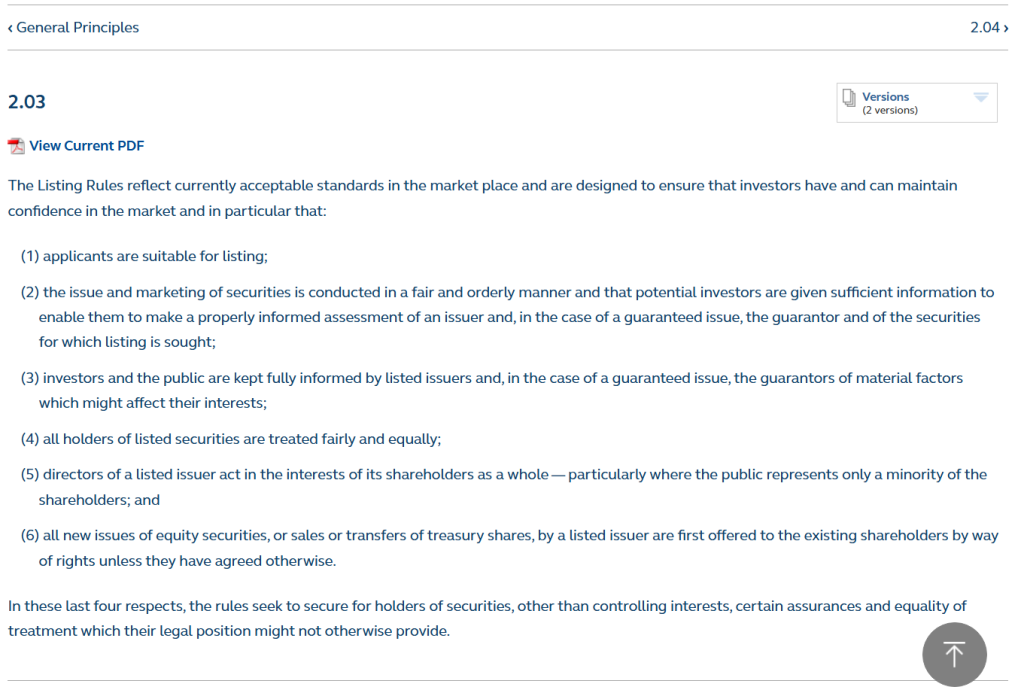
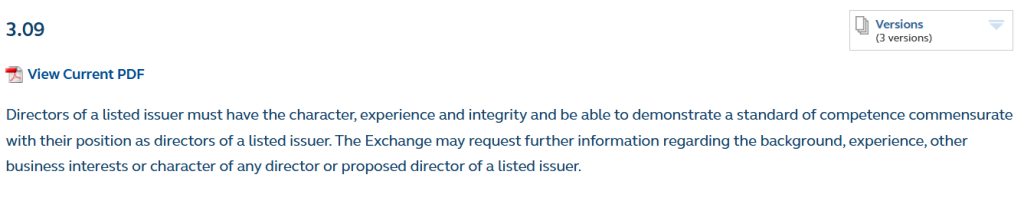
The implications for Hithium’s IPO are far-reaching and should not be understated. Under HKEX Listing Rule 2.03, the Exchange must be satisfied that an issuer is suitable for listing. Rule 3.08 requires a director to act honestly and for proper purposes, while Rule 3.09 demands that directors demonstrate the character, experience, integrity, and competence commensurate with their role in a listed company. If the allegations against Mr. Wu are proven true, they would paint a picture of an individual who, from the very start of his tenure at CATL, deliberately used a family member to disguise a personal financial interest, accepted bribes in exchange for abusing his position of authority, and pursued personal gain at the direct expense of his then-employer. These are not minor governance concerns. They go to the very heart of whether Mr. Wu is a fit and proper person to lead a publicly listed company.
The Securities and Futures Commission (SFC) has itself recently highlighted — in its appendix to a circular — the importance of sponsors performing substantive due diligence on exactly these types of issues, warning against a “process-driven approach” that fails to uncover material facts relevant to a listing applicant’s suitability. The bribery litigation against Mr. Wu is precisely the kind of issue the SFC had in mind.
What makes this development especially alarming is that it fits squarely within a broader pattern of disclosure failures that have already characterized Hithium’s second A1 filing. As we have previously reported, the Application Proof fails to adequately disclose the company’s vendor financing arrangements, the loss of its largest overseas customer to bankruptcy, the true nature of its Texas assembly facility, and the full extent of its regulatory exposure in the United States. A bribery allegation of this nature involving the company’s own chairman perhaps represents the most serious omission of all. Yet it doesn’t come as surprise to anyone. Potential investors reading Hithium’s A1 filing would have no way of knowing that a live lawsuit alleging commercial bribery has been formally accepted by a PRC court and is now proceeding against the very individual who controls the company and chairs its board.
The HKEX and the SFC now face a clear choice. The bribery litigation must be investigated thoroughly, and Hithium’s sponsors must be required to perform the due diligence and analysis that this situation demands. Which they failed to do, twice. The Application Proof will need to be substantially amended to include full, prominent, and transparent disclosure of the litigation, the underlying facts, and the risks it poses to Hithium and its prospective investors. At a minimum, regulators should consider suspending Hithium’s listing application until a thorough and satisfactory response is provided. Allowing the IPO to proceed while a cloud of bribery allegations hangs over the company’s controlling shareholder would be inconsistent with the HKEX’s stated mission to maintain an orderly and fair market and would risk exposing retail investors to significant losses should the litigation result in an adverse finding shortly after listing.
Taken together with everything else we know about Hithium — its reliance on government subsidies to artificially generate any profit at all, its deteriorating margins, its stretched receivables cycle, its undisclosed vendor financing arrangements, and its repeated failures to list — this latest development raises a fundamental question that regulators and investors alike should be asking: is this a company that has ever been forthcoming with those it is asking to trust it? The answer, based on the evidence, appears to be no.
The HKEX’s failure to properly investigate Hithium’s disclosure, or worse, to allow Hithium to continue toward a listing without demanding full transparency, would be a grave error — one that could leave investors exposed to serious and entirely avoidable harm. What makes this all the more troubling is that the HKEX has been vocal in recent months about its commitment to raising the quality of IPO submissions, publicly pushing sponsors to improve the standard of their applications. Yet here, when presented with a concrete and well-documented case of material omissions, an undisclosed bribery litigation against a controlling shareholder, and a pattern of disclosure failures stretching across multiple filings, the Exchange has an opportunity to demonstrate that its commitment to quality is more than rhetoric. Allowing Hithium to proceed unchallenged would send precisely the opposite message.
Leave a Reply